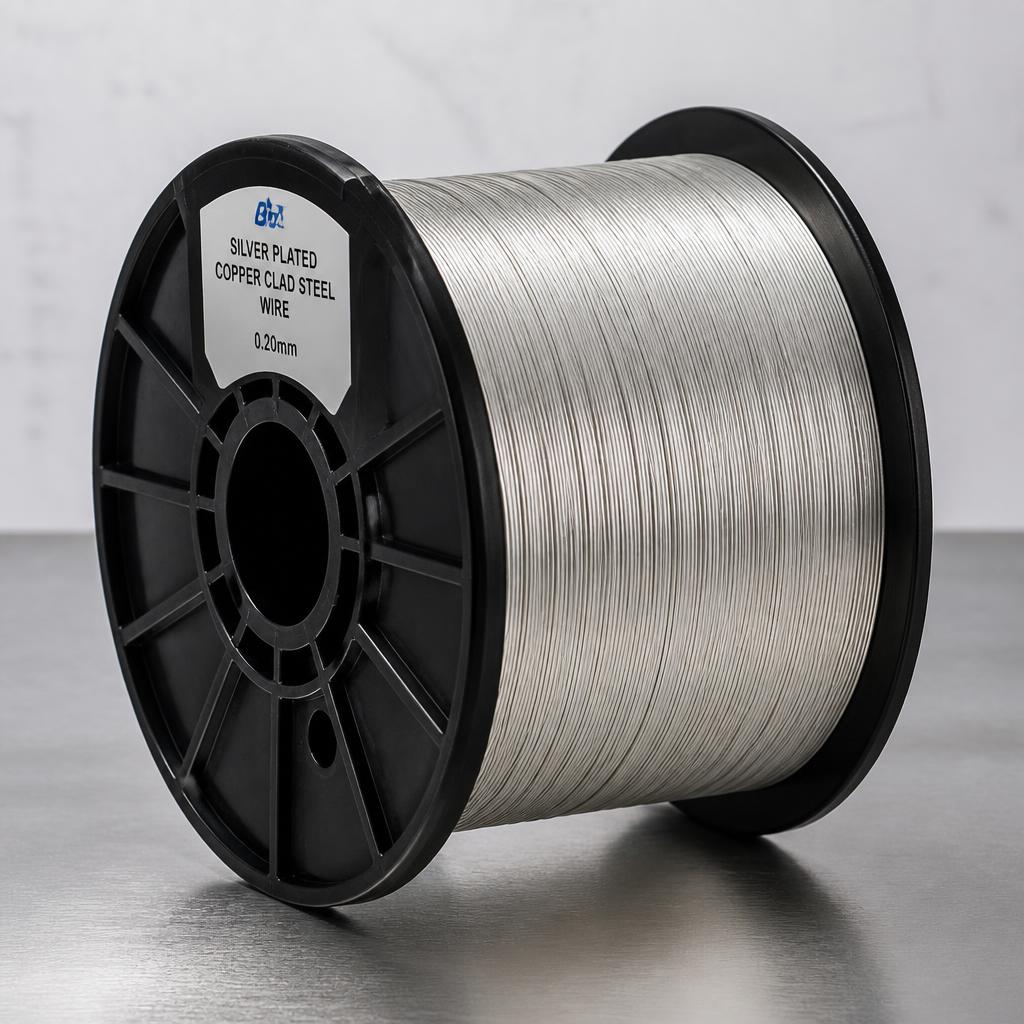
Coated Conductors
Tin · Silver · Nickel · Enameled · Multi-layer plating
Why This Conductor
Plating that doesn't flake off at the crimp.
Bath chemistry is computer-controlled and current density gets dialed in per wire diameter. Every batch then takes thermal shock at 150°C followed by a bend-strip test. One flake lifts and the whole lot is stripped and re-run. That policy costs us yield. It has never cost us a field return.
Tin. Silver. Nickel. Enamel. Mix and match.
Hot-dip tin for general corrosion: cheap, effective, good to 150°C. Electroplated silver for VHF/UHF, where skin depth is measured in microns and surface resistivity sets insertion loss. Electroless nickel for 260°C continuous duty, with no current crowding at the edges. Polyester-imide enamel for fractional-horsepower motor windings.
ASTM B227. B229. B559. IEC 60317. All of them.
Coating adhesion testing is not optional here. Every coated reel leaves with a test report: thermal shock, bend-strip, solderability (J-STD-002), and salt spray (ISO 9227 NSS) if the PO called for it.
Technical Data
| Parameter | Value |
|---|---|
| Base conductor | CCS (21-55% IACS) or pure copper |
| Coating types | Tin, Silver, Nickel, Enameled, Dual-layer |
| Diameter range | 0.05-3.00 mm |
| Coating thickness | 1-15 μm (application-engineered) |
| Temperature range | -65°C to +260°C (coating-dependent) |
| Standards | ASTM B227, B229, B559, IEC 60317, J-STD-002 |
Frequently Asked Questions (FAQ)
What coating thicknesses are available on plated CCS wire?
Coating thickness runs 1-15 µm, engineered per application: 3 µm tin for harness terminations, silver for VHF/UHF skin-depth service, and nickel up to 260°C continuous. Dual-layer builds such as tin-over-nickel are standard production, not specials.
Will the plating flake at the crimp or during reflow?
No. Every batch is thermal-shock tested at 150°C followed by bend-strip adhesion testing, and solderability is verified to J-STD-002. If a single flake lifts in QA, the whole lot is stripped and re-run before it ships.
What temperature range can coated conductors survive?
Coated conductors are rated from -65°C to +260°C depending on coating: hot-dip tin to 150°C, electroplated silver for RF service, and electroless nickel for 260°C continuous under-hood environments.
Can you plate over pure copper as well as CCS?
Yes. You spec the base conductor, CCS (21-55% IACS) or pure copper, and we plate it. All coated reels ship with thermal shock, bend-strip and salt spray (ISO 9227 NSS) reports when the PO calls for them.
How do I choose between tin, silver and nickel coatings?
Tin (typically 3 µm) is the default for soldered harness terminations and general corrosion margin. Silver suits VHF/UHF service where surface resistivity sets insertion loss. Nickel is the choice above 150°C, protecting to 260°C continuous in under-hood and instrumentation duty. If the duty is uncertain, send the temperature and joining method and we confirm the coating within 24 hours.
Related Applications & Resources
Custom specification?
We regularly produce bespoke IACS grades, custom coatings and non-standard diameters. Tell us your application and talk to a specialist.